
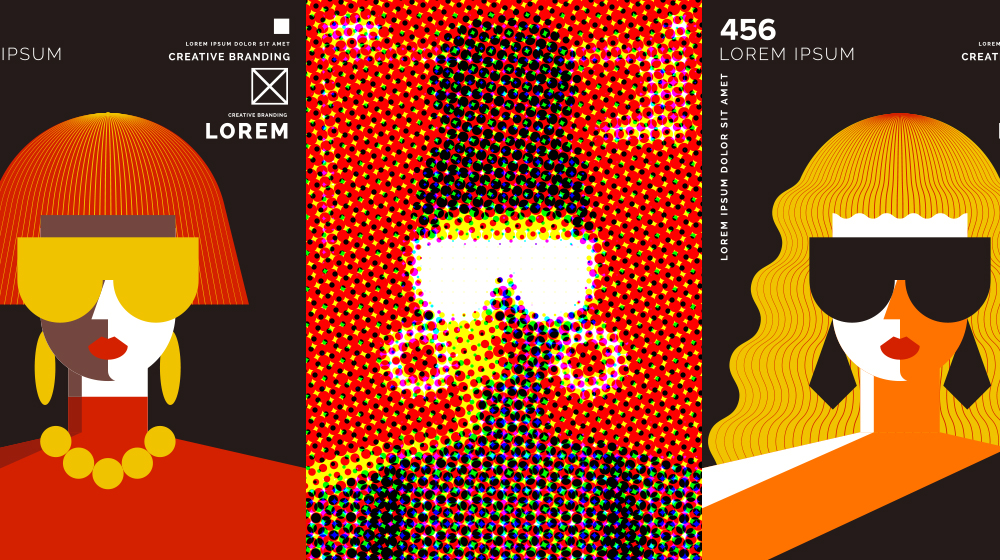
Raster graphics are made up of pixels—tiny squares of colour that form an image. This format is commonly used in photography and detailed visual content, where subtle gradients and complex textures are required. However, because raster images are resolution-dependent, they can lose quality when scaled beyond their original size, resulting in visible pixelation. Formats such as JPEG and PNG are typical examples of raster graphics.
Vector graphics, by contrast, are created using mathematical equations that define shapes, lines, and curves. This means they are resolution-independent and can be scaled infinitely without any loss of quality. Vector formats such as SVG and AI are ideal for logos, icons, and technical illustrations where crisp edges and scalability are crucial.
The key difference lies in flexibility and application. Raster images excel at realism and detail, making them ideal for rendered outputs and photographic visuals. Vector graphics, on the other hand, provide precision and adaptability, making them perfect for branding and design systems that need to work across multiple sizes and platforms.
At Cave, we understand when to use each format to achieve the best possible outcome. By combining the richness of raster imagery with the scalability of vector graphics, we create visuals that are not only visually striking but also technically robust—ensuring consistency across every touchpoint.